Pet obesity is one of the most common — and most preventable — canine health problems. Here’s why the leisurely daily walk isn’t enough, and what actually moves the needle.
The number
Roughly 22% of dogs are classified as overweight or obese (Dogster), and owner-reported numbers run much higher: in one 2026 survey, 54% of dog owners described their own dog as overweight and 27% said a vet had recommended a diet (Bella & Duke). The gap between those figures is the real story — a lot of dogs are carrying extra weight that their owners haven’t classified as a problem yet.
Why it matters more than appearance
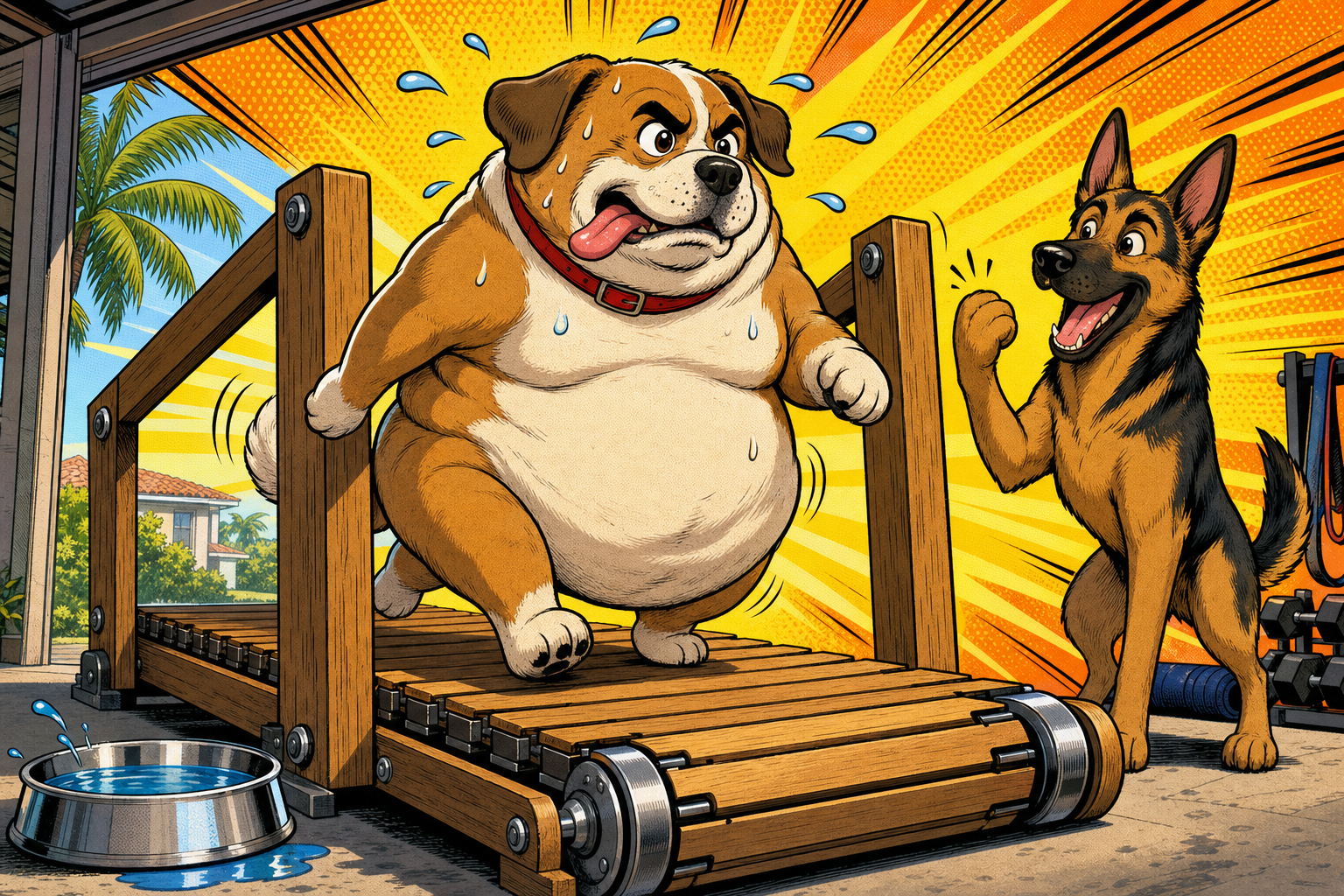
Excess weight isn’t cosmetic. It accelerates joint degeneration, increases anesthetic and surgical risk, worsens heat intolerance, raises the risk of diabetes and certain cancers, and shortens lifespan. It’s also self-reinforcing: heavier dogs move less, so they lose muscle, so they burn fewer calories, so they gain more. The loop tightens quietly over a couple of years.
The problem with “we walk every day”
A twenty-minute stop-and-sniff neighborhood walk is wonderful enrichment. It is not much of a cardiovascular stimulus. Most leash walks sit well below the intensity needed to drive real change in body composition, because the pace is set by whatever the dog wants to smell. To shift fat and build muscle you need three things a casual walk rarely provides:
-
Sustained heart rate — continuous effort, not stop-start
-
Progressive overload — slightly more work this week than last
-
Consistency — sessions that happen regardless of weather, schedule, or motivation
What structured conditioning does instead
Purpose-built canine cardio equipment exists precisely because owners can’t hit those three targets on a sidewalk. The pet fitness industry has grown fast around this gap, from canine cardio classes to dedicated conditioning equipment (Fox News), and structured fitness programs are increasingly treated as a standard part of preventive care rather than a luxury (Financial Content).
A non-motorized slatmill fits weight-loss work unusually well. The dog powers the belt, so effort is real and measurable. Sessions are repeatable, so you can add a minute or a slight incline each week and actually track progress. And the low-impact, straight-line motion means an overweight dog — who is by definition already loading their joints heavily — can build cardiovascular fitness without pounding them (Dootyful Scoopers).
The plan that works
-
Get a baseline. Vet weigh-in and body condition score. Photograph your dog from the side and above.
-
Measure the food. A measuring cup, not a scoop. Count treats as calories. This is where most of the weight comes off.
-
Add structured cardio 2–3x per week. Short and consistent beats long and occasional.
-
Keep the walks. They serve a different purpose — sniffing, decompression, and social contact.
-
Re-weigh every 3–4 weeks. Target 1–2% of body weight lost per week. Faster isn’t better.
-
Watch muscle, not just the scale. The goal is a lighter, stronger dog, not a smaller weak one.
The encouraging part
Canine health metrics are trending in the right direction as owners get more proactive about weight, diet, and preventive care (PR Newswire). Dogs respond to fitness work fast. Give a dog eight weeks of consistent conditioning and controlled feeding and the difference is usually visible from across the room.